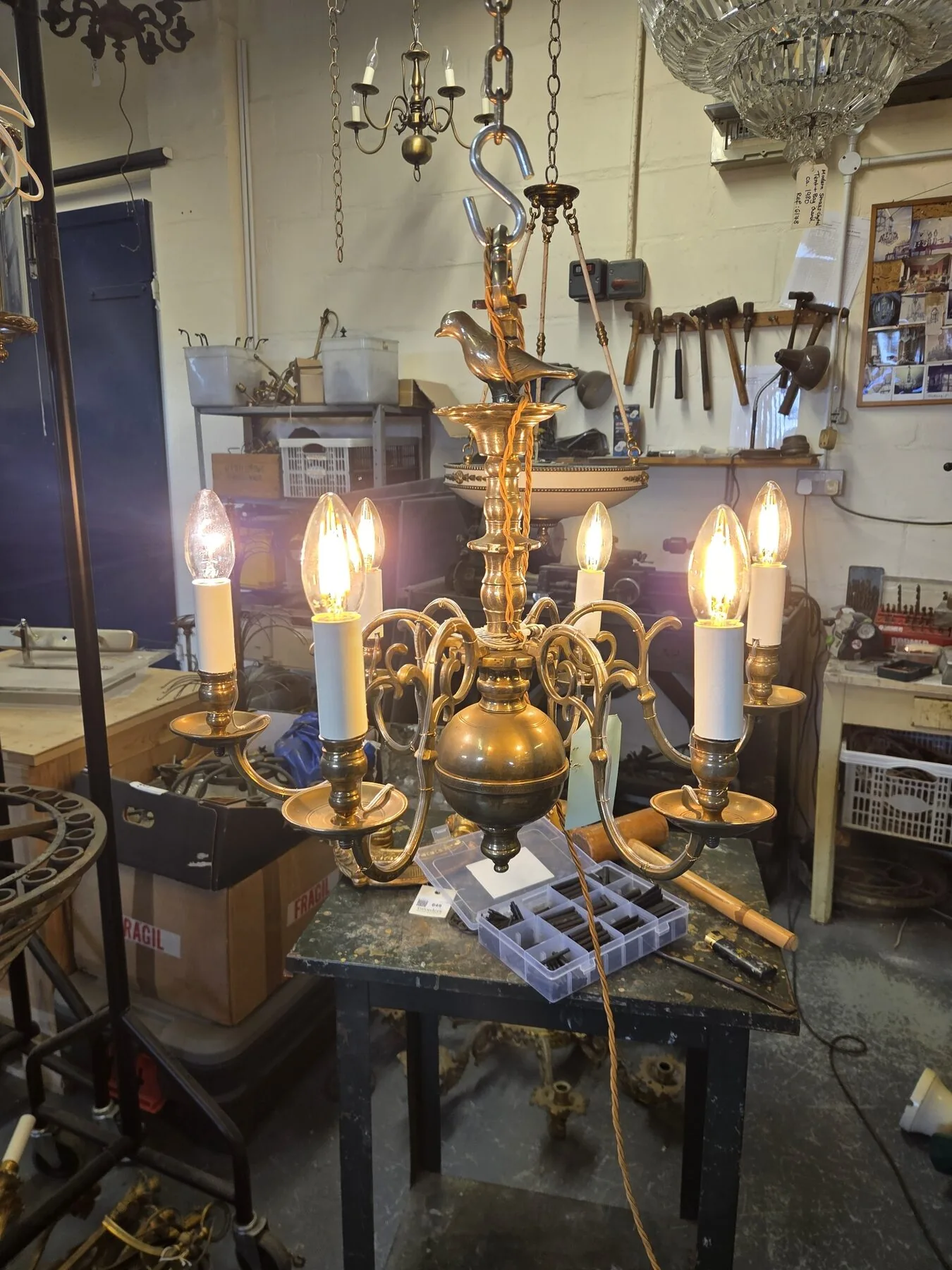
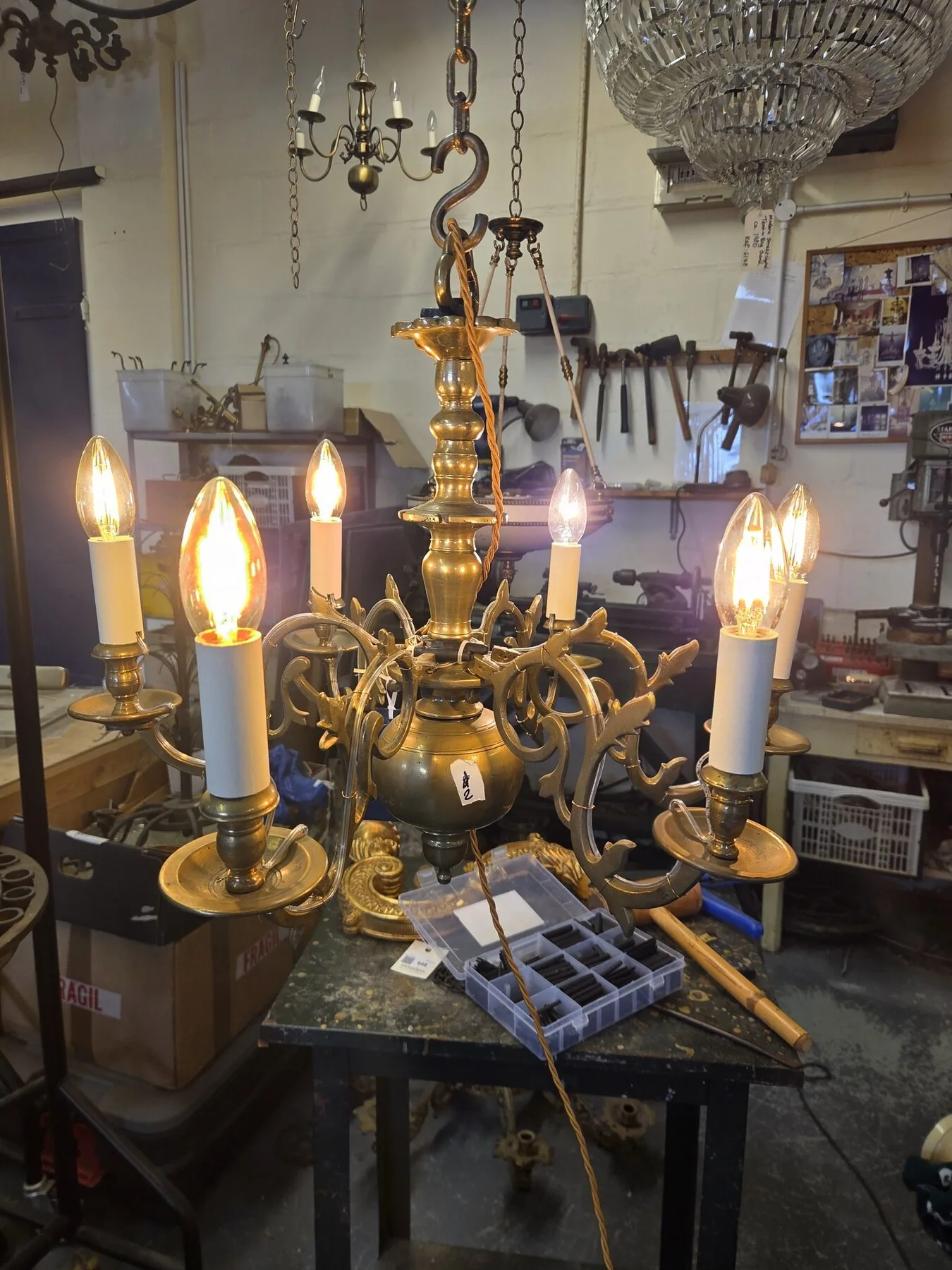
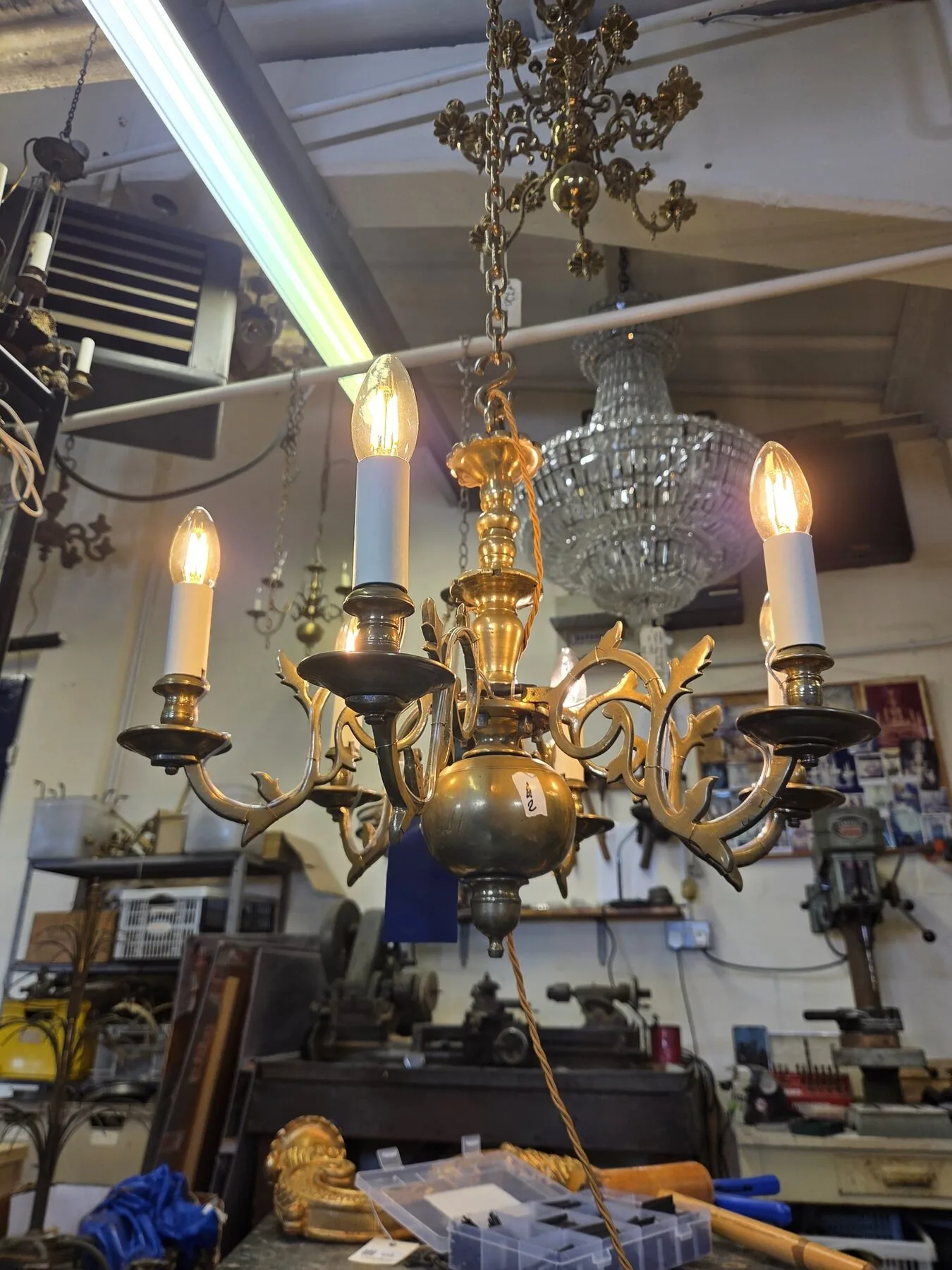
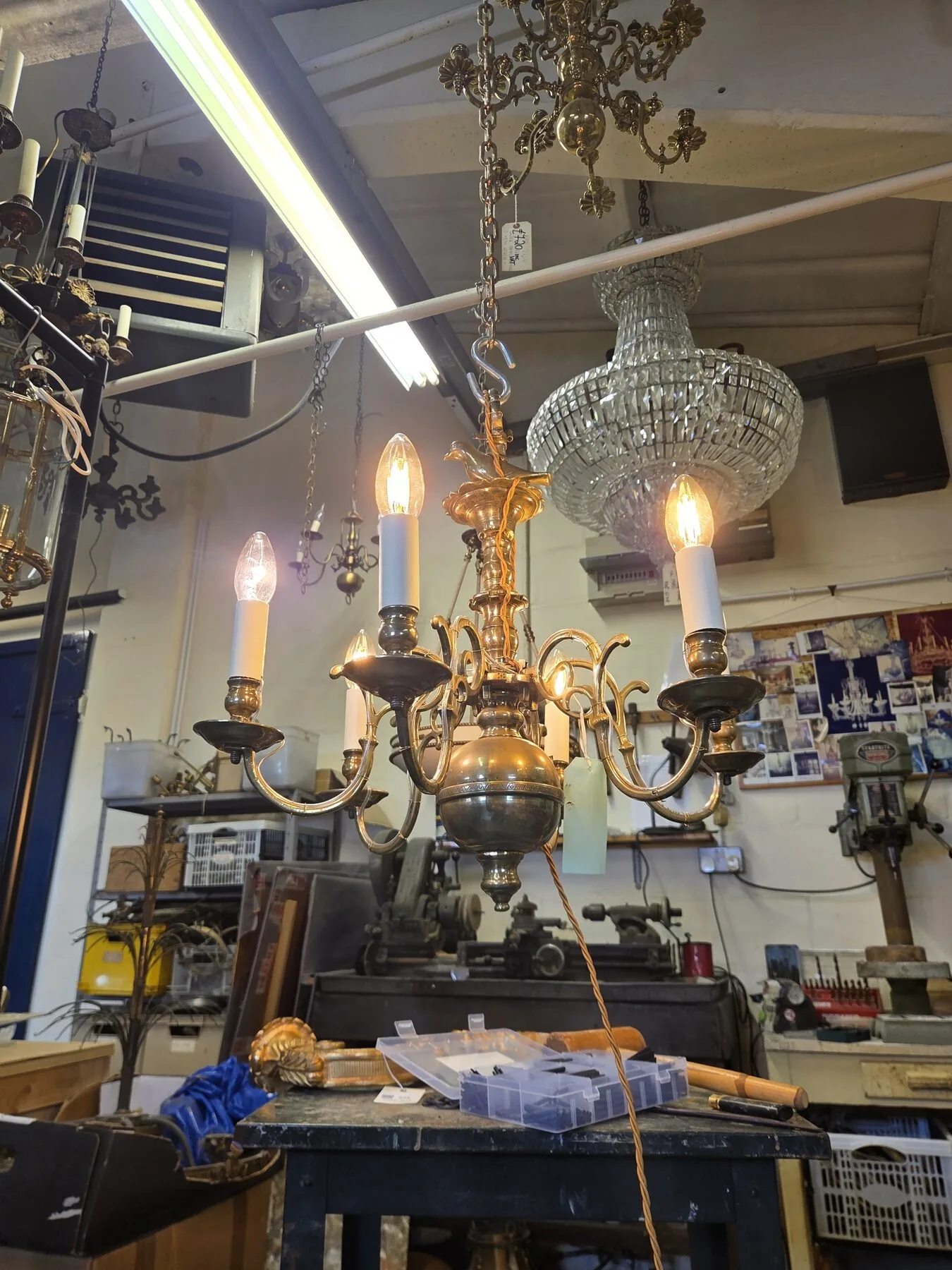
A six-arm brass chandelier in the Flemish manner, distinguished by its cast bird finial above a turned baluster stem and terminating in a heavy ball, was brought into the workshop. The piece had accumulated the ordinary wear of long service and required conservation of its metal surfaces together with a full, sympathetic rewire.
The Piece
The chandelier is cast and turned in solid brass, with six scrolled arms rising from a central boss and pierced acanthus back-plates set between them. A turned baluster stem carries a small platform on which a cast bird — a traditional Low Countries motif — is perched. The characteristic ball at the base and turned finial complete the composition.
Work Carried Out
- Careful dismantling of the chandelier into its constituent parts
- Conservation cleaning of the brass, retaining the aged patina rather than repolishing
- Consolidation of the arms, back-plates, drip pans and central boss
- Complete rewire in double insulated flex, run discreetly outside the arms to avoid altering the original castings
- New candle tubes and lamp holders to match the original proportions
- Reassembly, suspension and full electrical testing on the workshop rig
Approach
The intention throughout was conservation rather than restoration: nothing original was replaced where sound, and the surface was left with its earned colour. Because the arms could not be drilled without damaging the original castings, the rewire was run externally along each arm and secured so it reads as part of the fitting. The bird finial and other cast features were left entirely undisturbed.
Outcome
The chandelier now hangs safely and lights evenly across all six arms, its Flemish character intact. The wiring is tidy and unobtrusive, and the piece is ready to return to use. Related conservation and restoration projects include our restoration of a nineteenth-century brass church chandelier at St Mary's, Wollaston and the restoration of a Turkish chandelier, with the wider restoration approach set out on the service page.