What conversion means in practice
A gasolier was built to carry gas, not cable, so conversion is about using the fitting's own hollow structure rather than adding to it. Existing pipework is kept where it can be, cable is drawn through discreetly, and appropriate period fittings and components are selected for each piece. The original character and patina are protected throughout; nothing is stripped back to look new.
The converted fitting is then reassembled, fully tested and PAT tested and certified before it goes back into use, and it can be specified to work with LED lamps and dimmer systems.
What affects the outcome
Condition is the main variable. Old gas fittings have often been altered, part-converted or repaired before, and burners, taps and shades may be missing. The internal route through arms and column decides how invisible the wiring can be. Where a piece is unusually fragile or historically significant, we would rather discuss the approach with you first than commit to a method.
A comparable piece of work
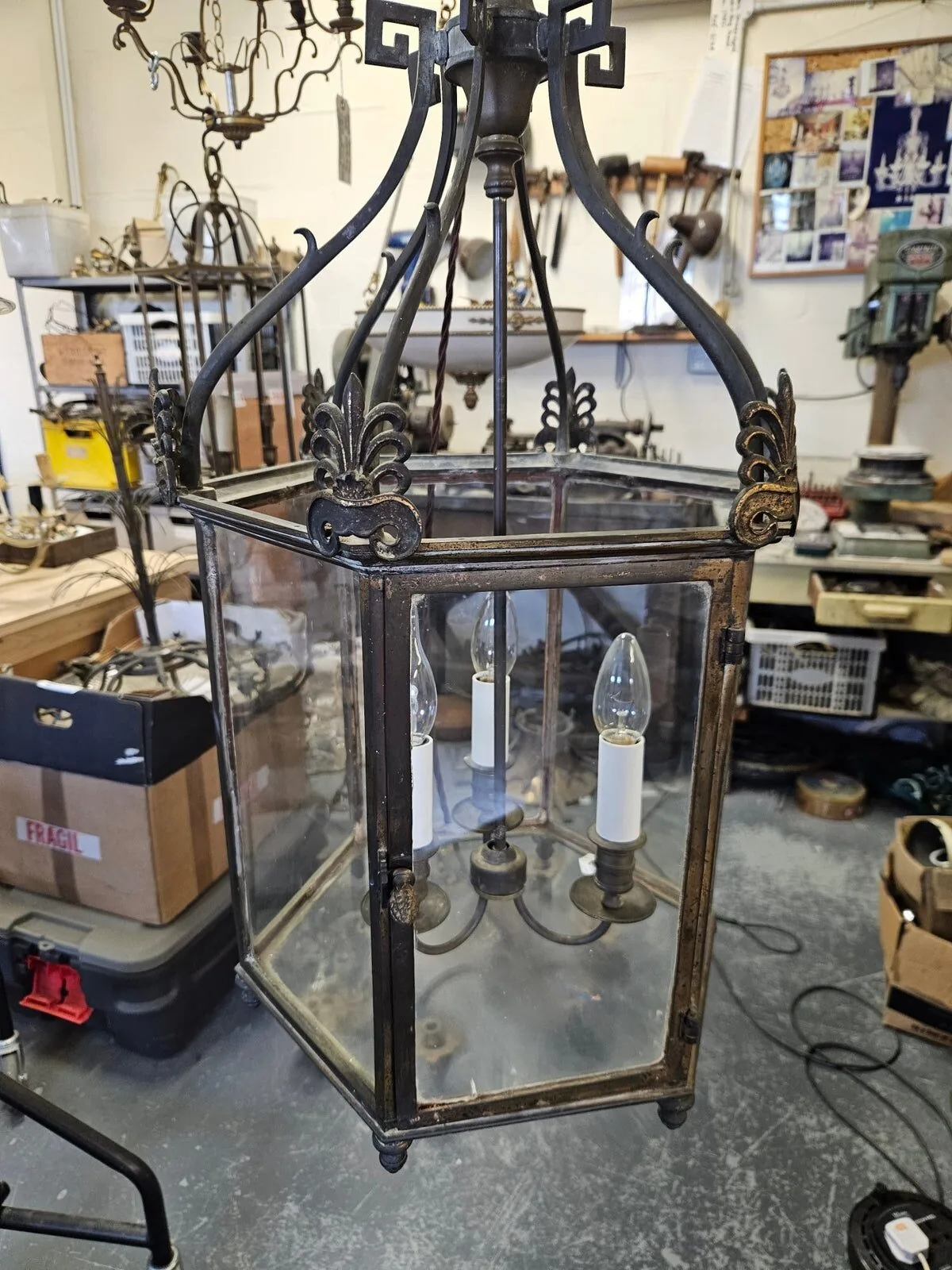
The principle is the same one applied to any historic fitting brought into electrical use. A Georgian hanging lantern taken into the workshop had its internal hanging chandelier re-electrified and a missing door finial made to match the existing fittings, with no original element altered to accommodate it — see restoration of a Georgian lantern.
Before you use an old gas fitting
A gas fitting should never be connected to a live gas supply or to a lighting circuit on the assumption that a previous conversion was done properly. Have it assessed first, and leave the final connection to a qualified electrician.
Chandelier Rewiring & Electrification — we work from our Hoddesdon, Hertfordshire workshop, serving Hertfordshire, London, the Home Counties and beyond.